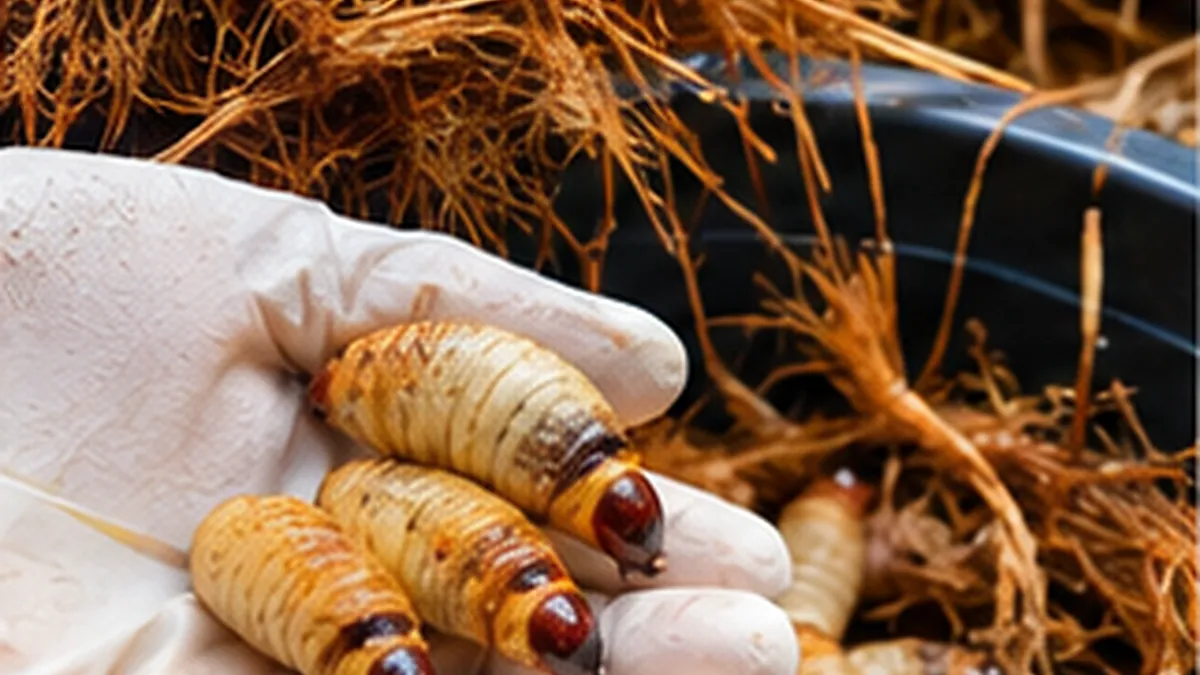
Photorealistic AI-generated image for illustration purposes.
Farming
Palm Weevil Grubs: Testing a Small Farm with Food Safety in Mind
Palm weevil larvae are eaten in parts of Central Africa. Turning that tradition into a business requires more than copying a video technique: species identification, controlled rearing conditions and food safety need to be addressed.
Start with market evidence, not yield promises
Identify real buyers: markets, restaurants, distributors and households. Ask whether they want fresh, processed or packaged products and what traceability they expect. Compare collection, rearing and delivery costs. Yield figures from another farm are not guarantees for your setting.
Identify the species correctly
Everyday terms such as “white grubs” may refer to different insects. A rearing method for one species may not work for another. Seek identification from a local specialist and check agricultural, environmental and movement restrictions before attempting to breed or transport insects.
Reduce contamination risks
Use traceable feedstock, monitored rearing areas and washable equipment. Reject materials with possible chemical residues, unusual decay or suspicious mould. Microbiological hazards and insect allergies deserve serious consideration. For food products, apply WHO food-hygiene principles and verify applicable local requirements.
Document small test batches
Record each batch’s date, source, method, incidents and buyer destination. Measure losses and actual sales. Do not invest in industrial capacity before understanding demand, compliance risks and process repeatability.
Action checklist: four steps to start
- Confirm the species with a specialist
- Check local rules
- Identify two professional buyers
- Monitor pilot batches instead of promising yields
Identify the species before treating the product as food
The expression “white grubs” can refer to different organisms. Precise species identification is essential for food production because husbandry methods, feed and safety risks are not interchangeable. Consult a competent agricultural, insect-rearing or entomology specialist before defining a process. Avoid collecting unknown larvae from random waste or substrates and presenting them as controlled food products. Record where breeding stock came from and trace every batch of material introduced. These records are needed to investigate contamination or an unexplained change in product quality.
Do not improvise food-safety procedures
Before selling, determine which local health and trading requirements apply to the intended activity and product form. Set up clean working areas, separate dirty operations from food handling, use safe water and protect batches from pests. The World Health Organization's general food-safety principles are useful foundations, but they are not a validated insect-specific processing method. If a batch smells unusual, has an unexpected appearance or comes from an uncertain substrate, do not sell it. Do not promise that an edible insect is allergen-free or that it can be stored safely for a particular period without appropriate validation.
Cost the pilot before predicting profit
Keep expenses for expert advice, equipment, feed or substrate inputs, labor, water, energy, handling, transport and losses. Treat only received customer payments as sales revenue. Interview more than one buyer and ask about preferred size, presentation, freshness and proof of hygiene. Traditional market buyers and restaurants may expect different product formats. Transport and cooling limitations must also be reviewed before choosing a delivery area. A very small, well-documented pilot can answer the commercial questions without exposing your cash flow to a speculative expansion.
Define the conditions that stop the experiment
Agree in advance to pause if the species cannot be identified, contamination appears, safe water is unavailable, there is no suitable food-safety process, or repeated customer complaints arise. The same applies if paid orders are too limited to cover recurring expenses. Stopping an unsafe or uneconomic trial is a valid business decision. Use traceable observations rather than profitability figures repeated on social media.
Explore the related Best Numerica book for further practical learning.
Explore the book: Palm Weevil Farming