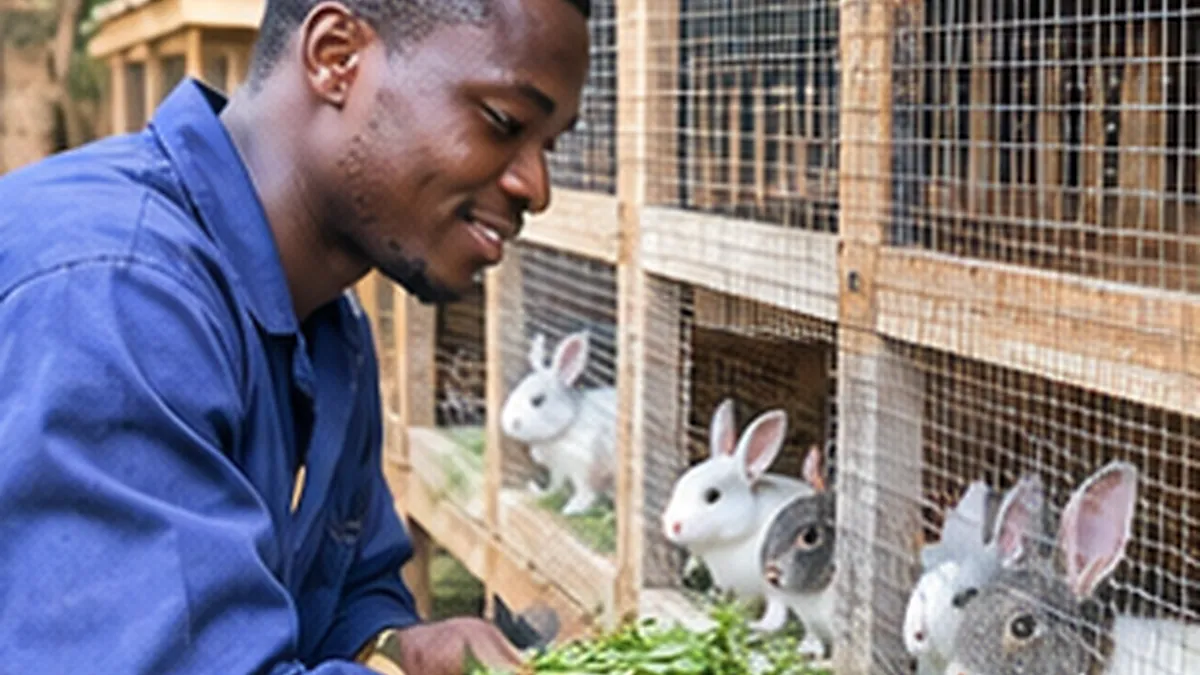
Photorealistic AI-generated image for illustration purposes.
Livestock
Rabbit Farming in Cameroon: Budget, Feeding and Risks to Plan For
Rabbit farming is often advertised as effortless income. In practice, disease losses, feed costs and weak buyer demand can consume the margin. A viable business begins with a limited number of animals and consistent record-keeping.
Find buyers before buying breeding stock
Identify restaurants, resellers, households and farmers who actually purchase rabbits locally. Selling live animals differs from selling meat in equipment, customers and regulatory obligations. Avoid forecasts based on social-media prices; confirm demand, quantities and purchase dates in your own area.
Design housing around animal welfare
Provide clean, ventilated hutches protected from excessive heat, dampness and predators. Ensure reliable access to clean water. Crowding can increase disease pressure and make daily checks harder. Plan an isolation space for sick animals and keep a written cleaning schedule.
Calculate real feeding costs
Feed expenses include suitable supplements, wasted feed, spoilage in storage and transport. Diets should suit the animal’s age and physiological condition, with professional guidance where possible. Do not replace balanced feeding with unidentified plants merely to reduce expenses.
Plan disease prevention
Record arrivals, deaths, symptoms, prescribed treatments and veterinary contacts. Avoid administering medication without diagnosis. Appropriate quarantine, pest control and disinfection are normal operating costs. Find a veterinarian or livestock technician before an emergency arises.
Run a realistic commercial pilot
Build a monthly table of actual expenses, animals raised, animals sold and cash collected. Include plausible losses and your own time. If sales do not cover costs, expand only after finding and fixing the technical or market problem.
Action checklist: four steps to start
- Identify three sales outlets and their volumes
- Plan water, ventilation and cleaning
- Find a local veterinarian
- Track mortality, expenses and cash receipts
Separate startup assets from running expenses
Hutches and durable equipment are startup investments; feed, water, bedding, transport and veterinary care are ongoing operating expenses. Mixing them makes it hard to determine the real cost of a breeding cycle. Set up a worksheet with amounts paid at launch, weekly expenses and potential unexpected costs. Include replacement equipment and a reserve for losses. To calculate cost per rabbit sold, do not divide feed spending by births alone. Use the number of animals actually sold and account for mortality, unsold stock and the time needed to care for animals. A business that ignores these items may appear profitable on paper while consuming cash every week.
Housing and feeding mistakes to prevent
A rabbit enclosure needs enough space, air movement and protection from rain, direct heat and predators. Surfaces that are difficult to clean create preventable hygiene risks. Heat deserves particular attention when selecting a site in Cameroon. Feeding should suit the animal's age and condition; unknown plants or a sudden change in feed can create problems. Provide reliable clean water. Avoid copying an impressive breeding formula from a video without checking whether the feed, housing and climate match your situation. Ask a qualified animal-health professional to review feeding and disease-prevention practices instead of experimenting with unverified treatments.
Keep a health and sales record
Identify each animal or group and log arrivals, births, health issues, veterinary actions, feed costs and sales. For breeding stock, record mating attempts and outcomes without treating online averages as promises. Handle new arrivals and suspect illness according to veterinary advice, and clean equipment consistently. A pilot project should turn each problem into evidence for a better process. Without written records, you may confuse a fertility issue with inadequate feeding, poor hygiene or weak market demand. Record cash received separately from orders that have not yet been paid.
When to expand the operation
Speak with butchers, restaurants and individual buyers about preferred product format, delivery frequency and payment method. Do not count informal expressions of interest as revenue. Expand only after repeated paid sales, monitored animal losses, affordable feed and reliable access to veterinary help. When any one of these conditions is missing, keeping the pilot small protects both the animals and the business.
Explore the related Best Numerica book for further practical learning.
Explore the book: Rabbit Farming