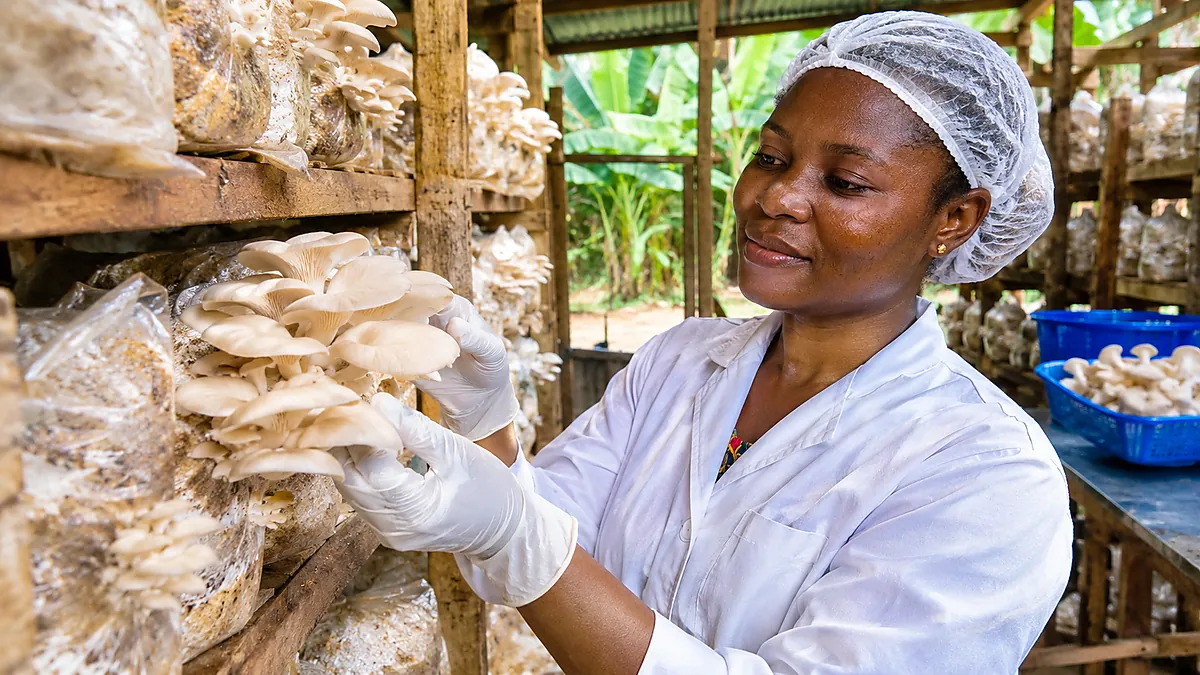
Photorealistic AI-generated image for illustration purposes.
Farming
Growing Oyster Mushrooms in Cameroon: A Practical Starter Plan
Oyster mushrooms can be produced in a small space, but a promising harvest photo is not a business plan. Before buying equipment, validate local demand, the quality of your spawn and the hygiene conditions you can reliably maintain.
Validate demand before production
Ask restaurants, produce sellers and households whether they buy fresh oyster mushrooms, how often, in what packaging and at what price they actually pay. Seek small trial commitments rather than polite praise. Record travel time to each buyer because fresh produce can lose value during slow distribution. Compare the selling price with delivery costs and unsold stock.
Prepare a space that is easy to clean
Choose a room protected from direct sun, pests and standing water. Make cleaning practical: reachable surfaces, safe water, separate waste handling and managed air circulation. Temperature and humidity affect yields; match the strain to local conditions and follow the spawn supplier’s documented procedure rather than copying arbitrary settings from social media.
Manage substrate, inoculation and contamination
Use suitable substrate of known origin and a treatment method appropriate for the species and equipment. Keep hands and tools clean. Label every batch with its date, spawn supplier and substrate. Isolate bags showing suspicious mould, and never sell or eat questionable mushrooms. Hands-on training is safer than improvising with unverified waste materials.
Measure three small test batches
Record spawn, substrate, utilities, packaging, travel, losses and labour. Weigh saleable mushrooms instead of reporting gross harvest alone. Calculate cost per kilogram sold and contribution margin per buyer. Compare traceable batches: weak results may reflect the supplier, process or market. Scale only after repeat orders.
Action checklist: four steps to start
- List five possible buyers and trial orders
- Find a traceable spawn supplier
- Create a record sheet for every batch
- Compare the cost per kilogram sold with cash received
Turn a harvest into orders before scaling
Fresh mushrooms do not sell themselves. Before the first harvest, draw up a shortlist of restaurants, caterers and vegetable sellers you can serve reliably. Record the format each buyer wants, delivery days, payment terms and the individual who approves an order. Interest expressed in a conversation is not proof of demand: seek small trial orders that specify both quantity and date. Plan what happens when a customer cancels at short notice. Do not promise shelf life you have not validated, and do not assume that a long trip in the heat leaves a highly perishable product unchanged. When delivery is unreliable, start with lower volumes.
Build a cost sheet that reflects what is actually sold
List spawn, substrate, treatment, bags, water, electricity, cleaning materials, paid help, transport and contaminated batches as separate expenses. Divide the total by the weight you actually sold, not by the weight you hoped to harvest. Add the eventual replacement of tools and the operator's time. Omitting either produces an attractive but misleading margin. As a planning exercise, prepare three hypothetical scenarios: weak demand, moderate demand and repeat orders. Compare them with real invoices once you have completed pilot batches. If you need to lower your price to attract buyers, revise the cost sheet before accepting an order at a loss.
Questions to ask your spawn supplier
Ask for the species and strain, handling requirements, appropriate substrate information and practical instructions on contamination control. Learn how the supplier recommends transport and storage; do not invent growing temperatures or humidity targets from an unrelated tutorial. For each batch, record the inoculation date, bags rejected, saleable harvest, customer feedback and cash received. Keep photographs and written notes so that a disappointing batch can be investigated. Consistent contamination is a reason to troubleshoot production, not a reason to purchase more supplies. Dispose of suspect product safely instead of selling it at a discount.
A short first-sale checklist
- Buyers and delivery days are documented.
- The workspace is clean, pest-resistant and has reliable water.
- Spawn comes from an identifiable supplier.
- Each batch has a label and expense record.
- A safe delivery and rejection process is in place.
The smartest initial objective is not a large mushroom room. It is one small production cycle that is measurable, safe and commercially repeatable.
Explore the related Best Numerica book for further practical learning.
Explore the book: Mushroom Farming