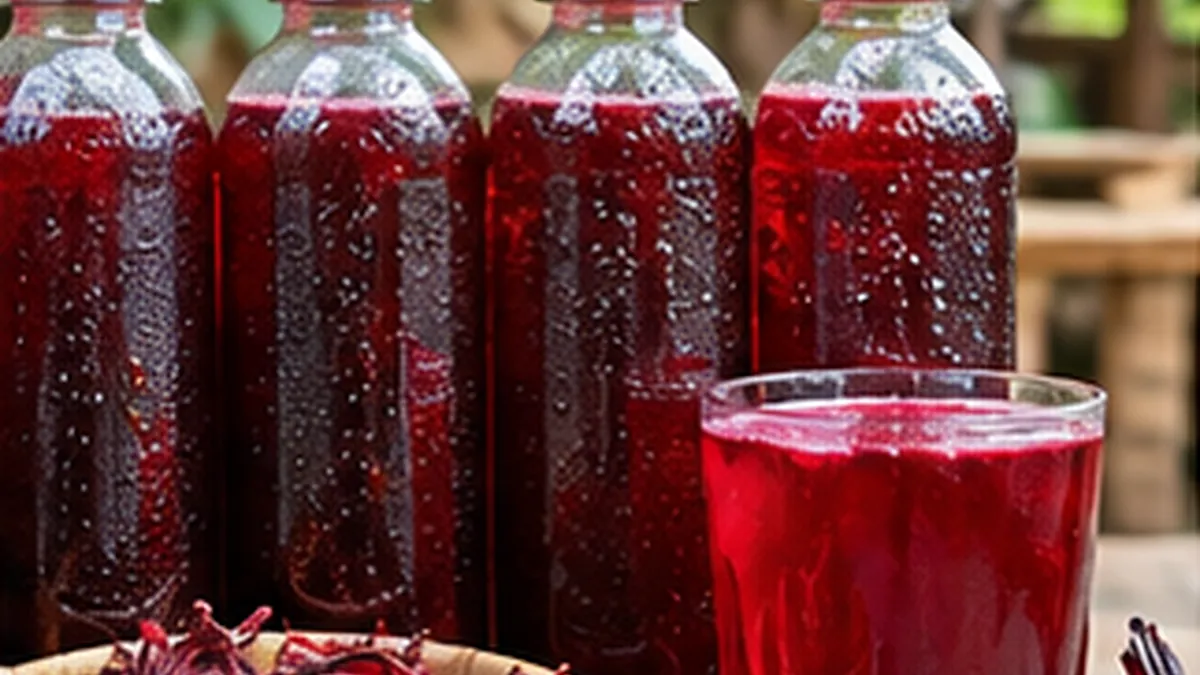
Photorealistic AI-generated image for illustration purposes.
Food business
Hibiscus Drink Business: Pricing and Food-Safety Basics
Hibiscus drink is popular for its colour and flavour, but popularity does not guarantee profit. The margin depends on ingredients, bottles, wastage and a food-safety process that protects customers.
Make the product consistent
Choose a repeatable recipe and document every batch: hibiscus quantity, potable water, sweetener, optional flavourings and final volume. Do not adjust ingredients randomly between batches. Returning customers notice consistency. If you test a lower-sugar variant, measure demand rather than assuming it will sell better.
Calculate cost per bottle
Add flowers, water, energy, sugar, bottles, caps, labels, transport, labour and normal losses. Divide by the number of bottles actually suitable for sale, not theoretical production. Unit margin equals money received minus full unit cost. Also track payment timing: retailers who pay late can strain working capital.
Apply food-safety basics
Wash hands, clean equipment, use safe water and prevent cross-contamination. Select food-grade packaging. Control cooling and storage using a validated process; colour and smell do not prove safety. Never claim a fixed shelf life without appropriate microbiological validation and controlled storage conditions.
Pilot a limited distribution route
Start with a quantity supported by confirmed orders. Record bottles made, sold, returned and discarded. Ask for precise feedback on flavour, size, perceived hygiene and price. Improve stock turnover and repeat sales before adding more outlets.
Action checklist: four steps to start
- Fill in a per-bottle cost table
- Keep one recipe sheet per batch
- Validate hygiene and storage
- Test sales at one outlet
Standardize production without guessing shelf life
Two hibiscus drinks with similar color may differ in flavor, concentration, sugar content and water quality. Document your chosen formula, ingredient suppliers, cleaning routine, vessels and final packaged quantity. Shelf life cannot be inferred from a social-media recipe or from hibiscus acidity alone. It depends on formulation, processing, packaging, temperature control and suitable validation. Without verified storage guidance, keep batches small, control distribution and seek advice from a qualified food-safety professional. A label with a made-up expiry date can expose customers and your business to avoidable harm.
Use actual receipts to calculate the selling price
A useful calculation starts with total batch expenses divided by the number of bottles fit for sale. Compare that unit cost with the money actually received per bottle. Include flowers, sugar, water, fuel or electricity, containers, caps, labels, cleaning, transport, labor, damaged bottles and leftovers. Free samples and promotions are expenses too. As a planning exercise, test three clearly hypothetical selling prices and compare margins; do not market these scenarios as verified Cameroon street prices. A premium price without buyers is not a business model, and a very low price that fails to cover costs is no better.
Compare shops, direct delivery and events
Resellers may ask for a wholesale discount or a commission. Direct deliveries cost time and transport, while events create short peaks of demand and possible leftovers. Record bottles delivered, bottles returned, money collected and payment delays for each channel. Stock left in a retailer's fridge is not a completed sale until it is sold and paid for under your agreement. Plan how unsold or potentially unsafe bottles will be removed; do not quietly reuse questionable stock in another batch.
Before handing over a bottle
- Use water and ingredients of known quality.
- Work with clean hands, surfaces and food-contact containers.
- Maintain a documented hygiene and temperature-control process.
- Identify each batch so a complaint can be investigated.
- Do not claim medical cures, detoxification or guaranteed shelf life without sound evidence.
A popular beverage becomes a sustainable business when customers can rely on its quality and the producer knows its real unit economics.
Explore the related Best Numerica book for further practical learning.
Explore the book: 100 African Recipes